Relay Receiver
Designing an MVP for Receiver — an end-to-end encrypted messaging tool built on Ethereum using the XMTP protocol.
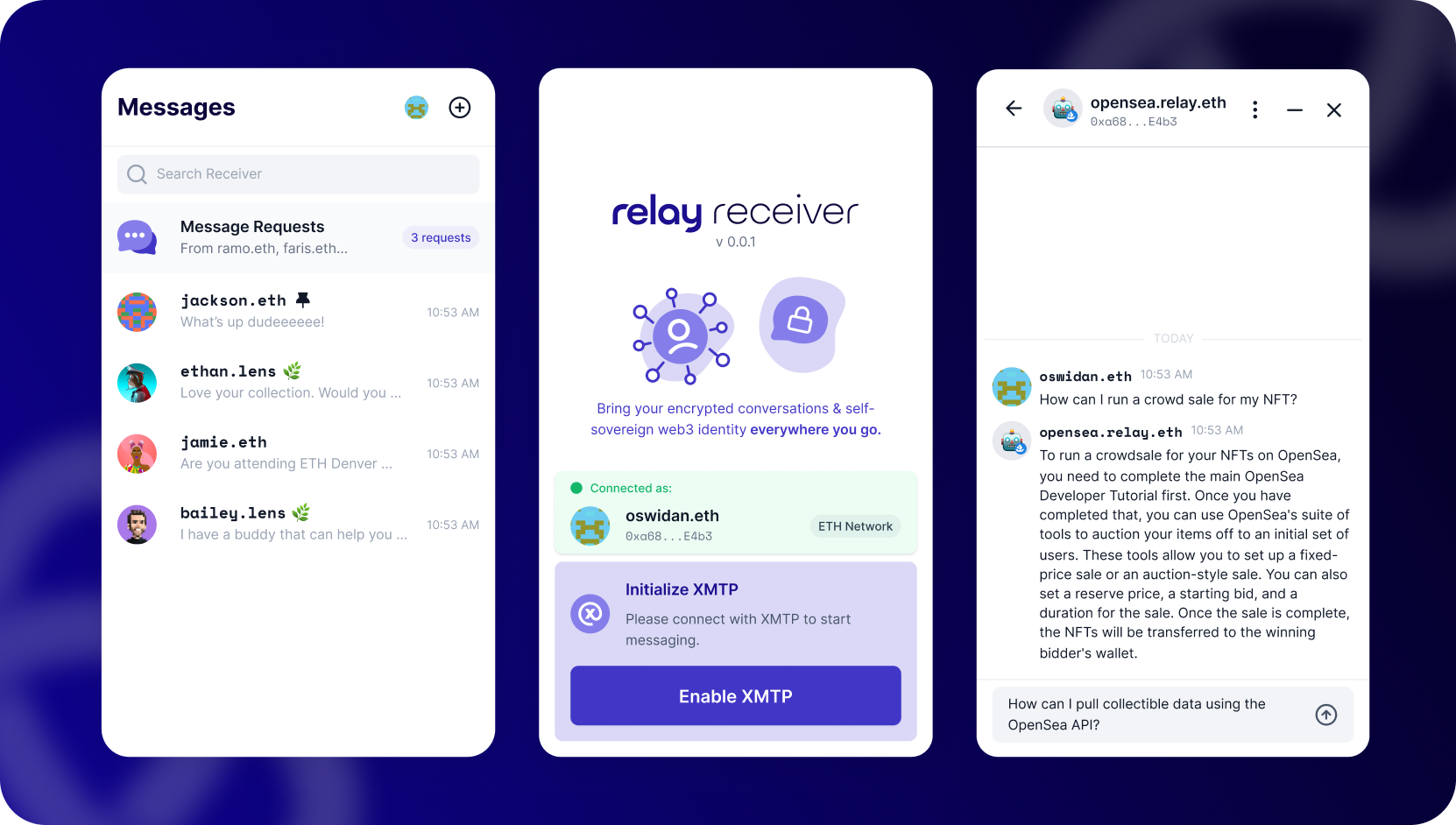
Relay is a web3 startup building a suite of tools focused on decentralized communication and educating the next generation of web3 users. During my time at Relay I designed and shipped Receiver — an end-to-end encrypted, Ethereum-based messaging widget that can be installed on any website. As the first designer on the product, I also established the brand and component system that future versions would build on.
Web3 users are lacking a native method of communicating using their decentralized identities.
There are many times where a user sees a wallet address or ENS name on a page and wants to send a message to that address — NFT sales, POAP events, DAO activities, and the like — yet the website has no form of chat and there's no way to find the user elsewhere. This gap effectively breaks the user's journey and pushes them out to web2 messaging outlets such as Discord or Telegram. The objective was to create an MVP for sending and receiving DMs with three things in mind: spam protection, spoofing protection, and an informative, intuitive UX.
A decentralized, universal messenger inbox that lets users bring their encrypted conversations and self-sovereign identity everywhere they go.
Initializing Receiver
To start sending messages, a user first connects their wallet, then signs the XMTP request — establishing their encrypted, identity-based inbox.
Home & New Message
Existing conversations display on the home screen. A user can start a new message by tapping the '+' icon in the top right, and check their connection or disconnect from the XMTP network by tapping their avatar.
Message Requests
Incoming messages from unknown contacts are routed to a separate Message Requests page. This keeps the main inbox spam-proof and uncluttered, letting users ignore risky or unwanted messages.
Branding & a component system
Receiver is a widget hosted on a variety of web3 sites, so it needed minimal branding that wouldn't conflict with the host. I flattened the logo's 3D appearance for smoother scalability and built a custom mark that masks the letters within the symbol's edges — then curated a full component library with loading, error, and success states for a smooth prototyping experience.
Adding AI: Relay Robot
The rise of AI opened up new value for the web3 platforms adopting Receiver. Relay Robot uses OpenAI's API, trained on web3 documentation, to handle on-chain interactions, support, and onboarding directly inside the inbox.
relay.cc landing page
The marketing site launched with a live demo so prospective customers could evaluate Receiver firsthand, then evolved to communicate the value proposition and how it works — all on a tight timeline.
Receiver gave web3 users a way to carry their encrypted conversations and identity across the entire web — one inbox, everywhere they go.
Receiver shipped as Relay's first MVP: an end-to-end encrypted messaging widget installable on any web3 site. As the founding designer I established the brand and component system that subsequent versions were built on — from the spam-proofing message-request model to the AI-assisted Relay Robot.